
Pakistan Independence Day:
Pakistan Independence Day: From the Pakistan Resolution to Yadgar-i-Fatah
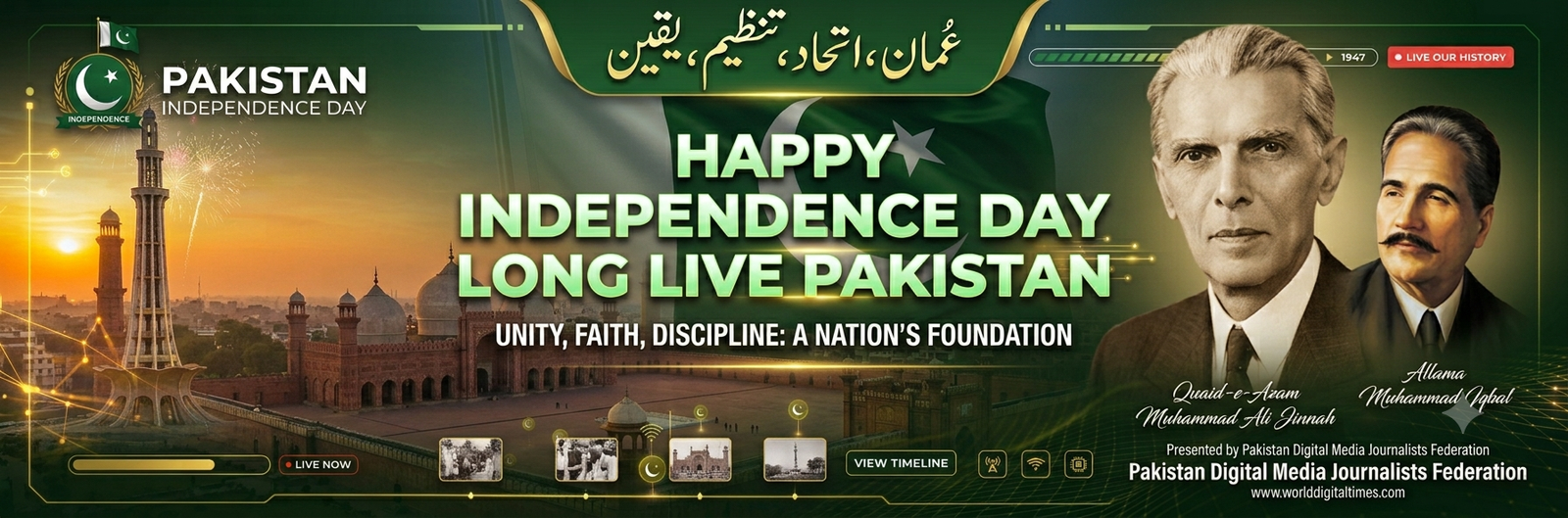
Pakistan celebrated its 80th Independence Day with national pride and enthusiasm across the country and among Pakistanis around the world. The celebrations paid tribute to the historic struggle led by Quaid-e-Azam Muhammad Ali Jinnah, the sacrifices made for the creation of Pakistan, and the martyrs who laid down their lives in defence of the homeland.
The Independence Day celebrations began early in the morning with special prayers after Fajr for Pakistan’s security, stability, progress and prosperity. The traditional 31-gun salute was fired in the federal capital, while 21-gun salutes were fired in each of the provincial capitals, formally marking the beginning of the national celebrations.
Flag Hoisting at Pakistan Monument
In Islamabad, the Pakistan Monument was among the major centres of Independence Day celebrations, where a dignified flag-hoisting ceremony was held. As the national flag was raised, the national anthem and patriotic spirit filled the atmosphere, while participants renewed their commitment to Pakistan’s sovereignty and independence.
The celebrations reflected a remarkable historical journey—from Minto Park Lahore, where the Pakistan Resolution was adopted in 1940, to the creation of Pakistan on 14 August 1947, the tribute to Quaid-e-Azam at Mazar-e-Quaid Karachi, and today’s commitment to defending the country.
From Minto Park Lahore to the Birth of Pakistan
In Lahore, Minto Park, now known as Greater Iqbal Park, became a major centre of Independence Day celebrations. This is the historic site where, on 23 March 1940, the Lahore Resolution, later known as the Pakistan Resolution, was adopted, giving a clear political direction to the Muslims of the subcontinent in their struggle for a separate homeland.
Lahore celebrated Independence Day with extraordinary enthusiasm. The historic site echoed with national songs, patriotic slogans and the sight of green-and-white flags.
The celebrations carried a powerful historical symbolism, linking the determination expressed at Minto Park in 1940 with the independence achieved on 14 August 1947. In a symbolic sense, the celebration stretched from Minto Park Lahore to Mazar-e-Quaid Karachi, connecting the Pakistan Resolution with the birth of the country under the leadership of Quaid-e-Azam.
Guard of Honour at Mazar-e-Quaid
In Karachi, a dignified Independence Day ceremony was held at Mazar-e-Quaid, where a Guard of Honour was presented to the Father of the Nation, Quaid-e-Azam Muhammad Ali Jinnah.
On the occasion, Pakistan Navy cadets assumed guard duties at the mausoleum and paid tribute to the Founder of Pakistan.
The national flag, national anthem and solemn military ceremony at Mazar-e-Quaid once again highlighted the historic reality that Pakistan’s independence was achieved through Quaid-e-Azam’s visionary leadership, a long political struggle and immense sacrifices by the Muslims of the subcontinent.
Yadgar-i-Fatah Inaugurated in Islamabad
In Islamabad, a grand ceremony was held late at night on the eve of Independence Day, where President Asif Ali Zardari and Prime Minister Shehbaz Sharif inaugurated Yadgar-i-Fatah, a monument built to honour Pakistan’s martyrs and commemorate Marka-i-Haq.
Chief of Defence Forces and Chief of Army Staff Field Marshal Syed Asim Munir, Chief of Air Staff Air Chief Marshal Zaheer Ahmad Babar Sidhu and Chief of Naval Staff Admiral Naveed Ashraf also attended the ceremony.
The participants stood respectfully as a military band played the national anthem.
The ceremony was attended by foreign diplomats posted in Pakistan, defence attachés, officers of the three armed services and senior civil and military officials. Their participation added an important diplomatic dimension to the celebrations, as representatives of countries from around the world joined the Pakistani nation in marking its Independence Day.
A special documentary on Marka-i-Haq and Operation Bunyan-un-Marsoos, highlighting the sacrifices of Pakistan’s armed forces and the defence of the homeland, was also screened during the ceremony.
Air Force Flypast and Night of Celebration
The Independence Day celebrations continued late into the night. A spectacular Pakistan Air Force flypast added to the national celebrations, while the skies and public spaces across the country reflected the spirit and colours of Pakistan.
From Islamabad, Karachi and Lahore to Peshawar, Quetta and other cities, streets remained illuminated with green-and-white flags and lights. Fireworks lit up the night sky as families and citizens gathered at major public places, chanting Pakistan Zindabad and celebrating the country’s independence.
Special Prayers Across the Country
Special prayers were offered in homes, mosques and public gatherings for Pakistan’s security, stability, prosperity and progress, as well as for the elevation of the ranks of the country’s martyrs.
Pakistanis living abroad also organised Independence Day events in different countries, while foreign diplomats and members of the international diplomatic community in Pakistan joined the celebrations and conveyed their good wishes to the Pakistani people.
From Minto Park Lahore, where the Pakistan Resolution gave political shape to the dream of a separate homeland, to Mazar-e-Quaid Karachi, where the nation paid tribute to its founder; from the Pakistan Monument in Islamabad, where the national flag was hoisted, to Yadgar-i-Fatah, where the country’s martyrs were honoured, Pakistan’s 80th Independence Day became a powerful reflection of its historic struggle, sacrifices, achievements and determination for the future.
It was not merely a celebration of independence, but a renewal of the national commitment to safeguard Pakistan’s sovereignty, honour its martyrs and carry forward the vision of Quaid-e-Azam Muhammad Ali Jinnah.
