Bangkok Meetings Conclude Amid Global Economic Uncertainty; Pakistan’s 2027 Chairmanship
Bangkok Meetings Conclude Amid Global Economic Uncertainty; Pakistan’s 2027 Chairmanship Opens a New Diplomatic Chapter
Bangkok Meetings Conclude Amid Global Economic Uncertainty; Pakistan’s 2027 Chairmanship Opens a New Diplomatic Chapter
By Irfan Tariq | Islamabad | 18 October 2026
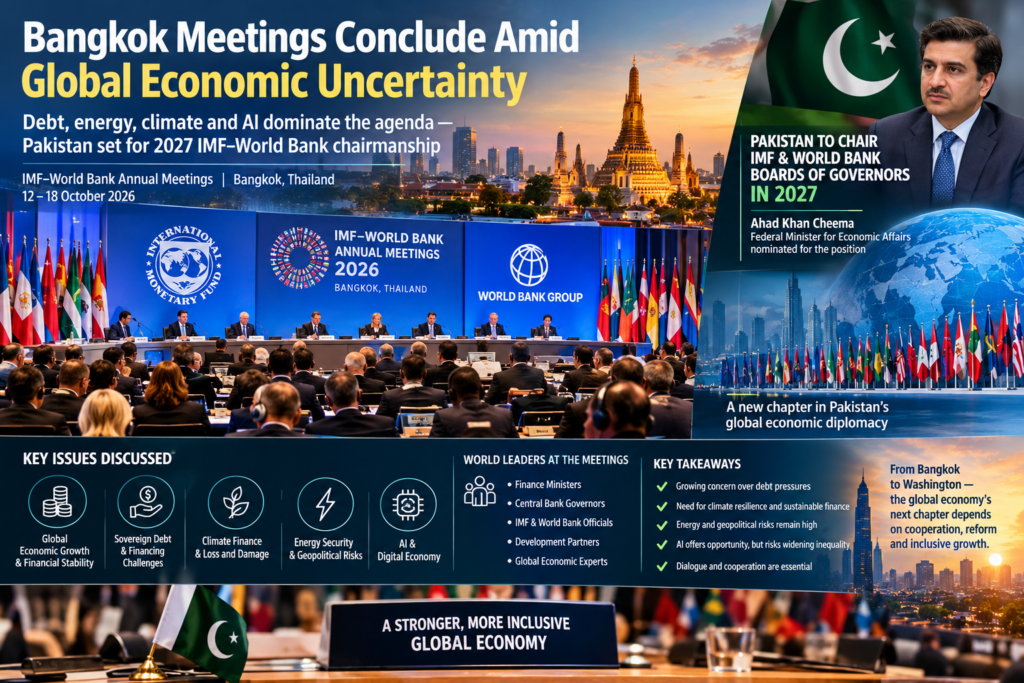
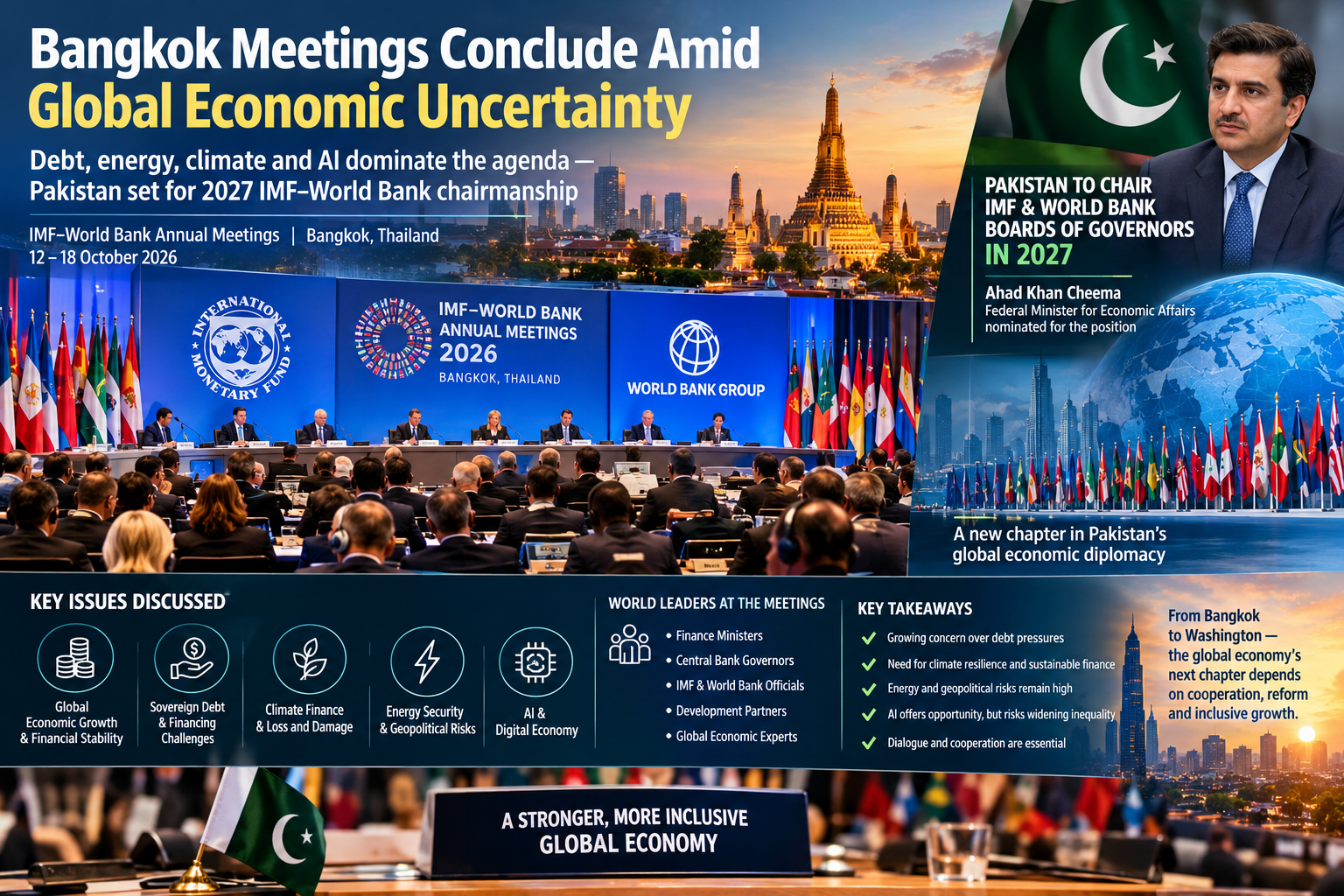
BANGKOK, Thailand — The 2026 Annual Meetings of the International Monetary Fund (IMF) and the World Bank Group concluded in Bangkok on 18 October, bringing together global economic policymakers at a time of mounting uncertainty over sovereign debt, geopolitical conflict, energy security, climate finance and the disruptive impact of artificial intelligence.
Held from 12 to 18 October, the meetings provided an important platform for finance ministers, central bank governors, development officials and international economic leaders to discuss the challenges facing the global economy and the policy responses needed to sustain growth and financial stability.
The conclusion of the meetings marks the end of a major international economic gathering, but the questions raised during the discussions remain central to the global agenda: how to support vulnerable economies, manage mounting financial pressures, expand development opportunities and ensure that technological progress benefits a wider share of the world’s population.
Pakistan’s Emerging Role in Global Economic Diplomacy
One of the significant developments for Pakistan was the announcement of its upcoming chairmanship of the IMF and World Bank Group Boards of Governors for 2027, with Federal Minister for Economic Affairs Ahad Khan Cheema nominated for the position.
The development represents an important diplomatic opportunity for Pakistan and a milestone in its engagement with multilateral financial institutions. It also creates an opportunity to bring greater attention to the concerns of developing economies, particularly those confronting high financing costs, climate-related losses and persistent external financing pressures.
The chairmanship should not be interpreted as giving Pakistan unilateral authority over IMF or World Bank policies. Its significance lies instead in the opportunity to facilitate dialogue, contribute to discussions on shared economic priorities and encourage constructive engagement among member countries.
Pakistan’s delegation deserves recognition for its participation in this important international forum and its efforts to advance the country’s economic and diplomatic interests. The value of this engagement will ultimately be measured by its contribution to stronger international partnerships, improved access to development finance and progress towards sustainable economic growth.
Recognition for International Cooperation and Leadership
The meetings also underscored the importance of cooperation among global leaders at a time when economic challenges increasingly transcend national borders.
The participation of finance ministers, central bank governors, development leaders and international institutions helped sustain dialogue on difficult issues, including debt sustainability, energy-market uncertainty, climate resilience and the economic implications of emerging technologies.
Such multilateral engagement deserves appreciation. Although differences remain over the appropriate policy responses, sustained dialogue provides an essential foundation for identifying common ground and developing practical solutions.
The challenge now is to translate discussions into meaningful action, particularly for developing countries whose fiscal resources are constrained by debt repayments, infrastructure needs and climate vulnerabilities.
Debt, Energy and Geopolitical Risks Remain Unresolved
Developing economies continue to face difficult choices between servicing external obligations and investing in public services, infrastructure and economic development.
Geopolitical tensions in the Middle East also pose risks to energy markets and international trade. Disruptions to oil supplies or shipping routes could increase import costs, intensify inflationary pressures and place additional strain on energy-importing countries.
For Pakistan, these developments reinforce the importance of economic diversification, stronger export performance, prudent financial management and a more resilient energy system.
IMF-supported reforms can help stabilise the economy, but durable progress will require greater domestic revenue mobilisation, improved productivity, competitive industries and reduced dependence on repeated external borrowing.
Artificial Intelligence and the Next Phase of Global Competition
Artificial intelligence is emerging as another defining issue for the international economic order. Investment in computing infrastructure, advanced semiconductors and data centres is creating new opportunities while increasing demand for reliable electricity and skilled workers.
Countries with strong technological capabilities, research institutions and dependable energy supplies may be better positioned to capture the economic benefits of AI. Developing economies risk falling further behind unless they invest in digital infrastructure, education and workforce development.
The challenge for international financial institutions and national governments is to ensure that technological advancement supports inclusive growth rather than widening existing economic disparities.
Looking Ahead: From Bangkok to Washington
With the Bangkok meetings concluded, attention turns to the implementation of policy commitments and preparations for the next phase of international economic cooperation.
For Pakistan, the forthcoming 2027 chairmanship presents an opportunity to contribute constructively to discussions on development financing, climate resilience, debt sustainability and the concerns of emerging economies.
The country will also need to demonstrate progress at home. Stronger institutions, credible economic reforms, transparent public finances and sustained investment in human capital will be essential if Pakistan is to translate diplomatic recognition into lasting economic gains.
The wider international community faces a similar test: whether cooperation can produce practical responses to the economic pressures affecting vulnerable countries and help establish a more resilient and inclusive global economy.
The Bangkok meetings have concluded, but the work ahead is only beginning. Their lasting significance will depend not simply on the discussions held or the commitments announced, but on whether governments and international institutions can turn dialogue into tangible progress.
For Pakistan, this is an opportunity to combine diplomatic engagement with domestic economic reform. For the world, it is a reminder that global economic stability depends on cooperation, responsible leadership and a shared commitment to sustainable development.