

Guterres Visit Reaffirms Pakistan’s Commitment to Multilateralism, Dialogue and UN Charter
Guterres Visit Reaffirms Pakistan’s Commitment to Multilateralism, Dialogue and UN Charter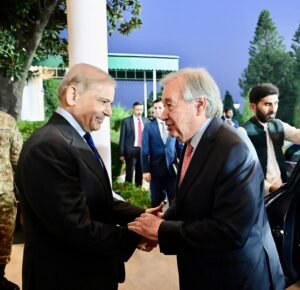
Islamabad — United Nations Secretary-General António Guterres concluded his official visit to Pakistan after a series of high-level engagements with the country’s political, diplomatic and military leadership, with discussions focusing on multilateralism, international peace and security, regional conflicts, UN peacekeeping and the future role of the United Nations.
The Secretary-General’s visit from 6 to 8 October 2026 provided an opportunity for Pakistan and the United Nations to review major regional and global challenges and reaffirm their commitment to dialogue, diplomacy and the purposes and principles of the UN Charter. Pakistan’s Foreign Ministry had described the visit as an opportunity to exchange views on regional and international developments and to highlight the country’s contribution to multilateralism, international peace and security, disaster preparedness and early warning systems. (Ministry of Foreign Affairs Pakistan)
During his engagements in Islamabad, Guterres met President Asif Ali Zardari, Prime Minister Muhammad Shehbaz Sharif and Deputy Prime Minister/Foreign Minister Senator Mohammad Ishaq Dar. He also held discussions with Field Marshal Syed Asim Munir, Chief of Army Staff and Chief of Defence Forces, and other senior officials.
Meetings with Pakistan’s Political Leadership
On 6 October, Guterres met Deputy Prime Minister and Foreign Minister Ishaq Dar. The two sides discussed regional and international peace and security, including Palestine, Jammu and Kashmir, Afghanistan, counter-terrorism, sustainable development, climate change and the future of multilateralism. Pakistan reaffirmed its commitment to the UN Charter, multilateralism and the peaceful settlement of disputes through dialogue and diplomacy.
The Pakistani side also reiterated its position on the Jammu and Kashmir dispute and raised concerns regarding India’s decision to hold the Indus Waters Treaty in abeyance. Discussions also covered Pakistan’s support for Palestinian self-determination and statehood.
Guterres subsequently called on President Asif Ali Zardari at the Presidency. A special investiture ceremony was held during which the President conferred the Nishan-e-Imtiaz on the UN Secretary-General in recognition of his international service and contribution to global peace and development.
On 7 October, Prime Minister Muhammad Shehbaz Sharif received Guterres. The Prime Minister reaffirmed Pakistan’s support for an effective, inclusive and representative United Nations and welcomed the Secretary-General’s UN80 Initiative, stressing the need for reforms that remain responsive to the priorities of developing countries.
The Prime Minister also highlighted Pakistan’s contribution to UN peacekeeping and its diplomatic efforts aimed at dialogue and de-escalation, including its mediation role between the United States and Iran.
The discussions also covered Jammu and Kashmir, the Indus Waters Treaty, Afghanistan, terrorism, Palestine and the need for greater access to affordable and concessional financing for developing countries facing development and climate challenges.
Guterres appreciated Pakistan’s longstanding contribution to the United Nations, particularly its role in UN peacekeeping, its engagement in the Security Council and its diplomatic efforts in support of dialogue, mediation and de-escalation.
Guterres at GHQ
One of the significant engagements of the visit was Guterres’s meeting with Field Marshal Syed Asim Munir, Chief of Army Staff and Chief of Defence Forces, at General Headquarters in Rawalpindi.
The meeting covered matters of mutual interest, the prevailing regional security environment and the UN’s role in promoting international peace and security. Discussions included regional stability, Jammu and Kashmir, India’s decision concerning the Indus Waters Treaty and terrorism emanating from Afghanistan.
Field Marshal Asim Munir reaffirmed Pakistan’s commitment to international peace and highlighted the country’s contribution to UN peacekeeping missions.
The UN Secretary-General, in turn, paid tribute to the sacrifices and contributions of Pakistan and its armed forces in the war against terrorism and in UN peacekeeping missions. He also acknowledged Pakistan’s continued commitment to international peace and security and appreciated its efforts toward the peaceful resolution of regional conflicts.
UNMOGIP and Disaster Preparedness
During his visit, Guterres also visited the headquarters of the United Nations Military Observer Group in India and Pakistan (UNMOGIP) in Islamabad.
The visit carried particular significance in the context of the UN’s longstanding engagement with the Jammu and Kashmir issue and its broader role in international peace and security.
The Secretary-General also visited the National Disaster Management Authority, where he was briefed on Pakistan’s progress in disaster preparedness and early-warning systems. Disaster resilience, climate change and the financing needs of developing countries were among the broader issues discussed during his visit.
At the Ministry of Foreign Affairs, Guterres also planted a sapling during his official visit, while the Foreign Ministry hosted engagements reflecting Pakistan’s longstanding cooperation with the United Nations. (Ministry of Foreign Affairs Pakistan)
A Message on the Future of Multilateralism
On 7 October, the Secretary-General delivered a keynote address at the Foreign Service Academy in Islamabad on “Strengthening Multilateralism in a Changing World: Geopolitics and the Role of the United Nations.”
The event was attended by Deputy Prime Minister/Foreign Minister Ishaq Dar, senior Foreign Ministry officials, members of the diplomatic corps, representatives of think tanks and other distinguished guests.
In his welcome remarks, Dar reaffirmed Pakistan’s commitment to multilateralism and the purposes and principles of the UN Charter. He emphasized the importance of an effective, inclusive and representative multilateral system at a time of profound geopolitical transformation and growing global challenges.
Guterres reflected on his longstanding association with Pakistan, recalling his experience of more than two decades of service to the United Nations, including his tenure as UN High Commissioner for Refugees. He highlighted the generosity, resilience and solidarity of the Pakistani people.
The Secretary-General said the international community is facing interconnected challenges ranging from conflict and inequality to climate change and artificial intelligence. He stressed the need for stronger multilateral cooperation anchored in a reformed, more representative and effective United Nations.
He also expressed confidence in the people of Pakistan and commended their spirit of dialogue, cooperation and mutual respect.
Pakistan’s Role at the United Nations
Throughout the visit, Pakistan’s contribution to UN peacekeeping emerged as a recurring theme. The Secretary-General acknowledged Pakistan’s longstanding role in supporting international peace and security, while Pakistani leaders emphasized the country’s commitment to multilateral diplomacy and peaceful dispute resolution.
The Foreign Service Academy itself reflects Pakistan’s diplomatic engagement beyond its borders. The academy has trained hundreds of Pakistani Foreign Service officers and more than 1,600 diplomats from over 120 countries, making it an important centre for international diplomatic training.
The visit therefore extended beyond a series of bilateral meetings. It brought together questions of regional security, international law, peacekeeping, climate resilience, development financing, artificial intelligence and the future of the multilateral system.
As Guterres concluded his visit, Pakistan and the United Nations reaffirmed their longstanding partnership and their stated commitment to multilateralism, dialogue and diplomacy, with the UN Charter remaining at the centre of their engagement.
By Irfan Tariq — Islamabad
