
Pakistan’s Mediation: The Iran–US Ceasefire and the Global Implications of the Islamabad Talks
Pakistan’s Mediation: The Iran–US Ceasefire and the Global Implications of the Islamabad Talks
Written by Irfan Tariq
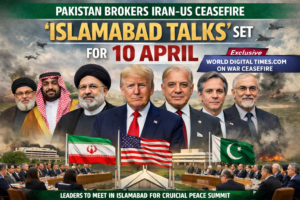
Occasionally, moments emerge in diplomatic history that shift the balance of power and reshape the global order. Recently, Pakistan played a decisive role in brokering an immediate ceasefire between Iran, the United States, and their respective allies. This is not merely a temporary pause in hostilities but a signal of emerging opportunities for lasting regional stability and Pakistan’s growing influence on the international stage.
This achievement also reflects a continuity of Pakistan’s historical leadership. Pakistan’s field marshals, whose strategic command secured victory against India in a defining war, elevated the nation’s international standing. At that time, the United States facilitated the end of the conflict, and Pakistan responsibly navigated the diplomatic pressures involved. One year later, Pakistan, guided by strategic foresight and divine providence, has again positioned itself as a credible mediator by facilitating the Iran–US ceasefire.
Late-night diplomatic efforts, led by Foreign Minister Ishaq Dar and the Ministry of Foreign Affairs’ seasoned diplomats, involved continuous engagement with Iran, the United States, Israel, Turkey, and the United Nations. Their efforts strengthened trust and laid the groundwork for meaningful negotiations.
Iran welcomed the ceasefire as a positive step but emphasized that it remains temporary and that further measures are needed to resolve long-standing regional tensions. The United States hailed the agreement as a victory for global peace, while Israel expressed caution, highlighting that sustainable peace requires concrete actions. Turkey and other allied nations supported Pakistan’s mediation efforts, and the United Nations described Pakistan’s role as historic and effective.
Pakistan has invited all parties to the Islamabad Talks on April 10, 2026. These negotiations are expected to be pivotal not only in consolidating the ceasefire but also in establishing a framework for security, cooperation, and durable regional relations.
From an analytical perspective, this development underscores the significance of medium and smaller powers in global mediation. Pakistan has demonstrated that historical experience, strategic leadership, and proactive diplomacy can yield tangible results in international conflict resolution. Success in the Islamabad Talks could solidify Pakistan’s reputation as a key advocate for peace, while failure could represent a missed opportunity with significant regional and global consequences.
This ceasefire is not an end but a beginning. The world’s attention is now on Islamabad to see whether this temporary lull can evolve into lasting and sustainable peace. Pakistan’s historical leadership, international recognition, and diplomatic acumen have once again shown that the country can play a decisive role not only in its own regional challenges but also in shaping broader global conflicts.
