

Iran isreail conflict ,Pakistan host peace talks
A Significant Diplomatic Chapter Concludes in Islamabad
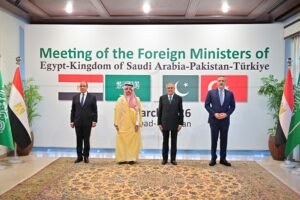
The recent visit of the foreign ministers of Saudi Arabia, Türkiye, and Egypt to Islamabad marked a highly significant moment in regional diplomacy. What initially appeared as a routine series of meetings evolved into a strategic engagement, highlighting Pakistan’s growing role as a mediator and facilitator for peace. With the conclusion of all meetings and the departure of the visiting dignitaries, this diplomatic chapter leaves behind important signals for the future of the region.
During their stay in Islamabad, the foreign ministers held detailed bilateral meetings with Pakistan’s Deputy Prime Minister and Foreign Minister, Senator Ishaq Dar. These discussions focused on the evolving regional situation, ongoing conflicts, and the need for stronger cooperation among key countries. In addition, the visiting ministers called on Prime Minister Muhammad Shehbaz Sharif, where high-level talks reinforced the importance of peace, stability, and collective efforts to address regional challenges.
A central highlight of the visit was the second round of consultations among the four countries—Pakistan, Saudi Arabia, Türkiye, and Egypt. This meeting followed the first round held in Riyadh earlier in March 2026, demonstrating continuity and seriousness in diplomatic engagement. The foreign ministers held in-depth discussions on the ongoing conflict in the region, expressing concern over its devastating impact on human lives and economic stability.
All sides agreed that war is not in the interest of any country and emphasized that dialogue and diplomacy remain the only viable solutions. They also reaffirmed their commitment to the principles of the United Nations Charter, including respect for sovereignty and territorial integrity.
One of the most important developments during these discussions was Pakistan’s initiative to facilitate potential talks between the United States and Iran. This proposal received strong support from the participating countries, reflecting confidence in Pakistan’s ability to act as a neutral and credible mediator. The backing of international partners, including China and the United Nations, further strengthened this position.
In his concluding remarks, Foreign Minister Ishaq Dar expressed gratitude to the visiting ministers for their cooperation and support. He reaffirmed Pakistan’s commitment to playing an active role in promoting peace and reducing tensions in the region. He also highlighted Pakistan’s ongoing engagement with global powers and its readiness to host meaningful dialogue aimed at achieving a lasting resolution to the conflict.
Now that the meetings have concluded and the foreign ministers have returned to their respective countries, the outcomes of these engagements carry significant importance. The consultations have not only strengthened diplomatic ties among the four nations but have also positioned Pakistan at the center of regional peace efforts.
In conclusion, the Islamabad meetings represent more than just diplomatic dialogue—they reflect a critical moment in international relations. Pakistan’s role as a bridge between different powers, combined with the collective will of regional countries, offers hope for de-escalation and peaceful resolution. The true impact of these efforts will unfold in the coming days, but the foundation for meaningful progress has clearly been laid.
