

Pakistan peace mission ,field marshal in Iran
 Peace Mission: Is Pakistan Back as a Mediator Between Washington and Tehran?
Strait of Hormuz tensions rise again as the 60-day framework expires; Field Marshal Asim Munir’s Tehran mission signals a renewed Pakistani diplomatic push
Analysis by Irfan Tariq
ISLAMABAD/TEHRAN: The US-Iran crisis has entered another critical phase. The 60-day diplomatic framework has expired without producing a comprehensive settlement, tensions around the Strait of Hormuz are rising again, and Washington and Tehran remain divided over the terms of a lasting agreement.
Against this backdrop, Pakistan appears to be stepping back into the diplomatic arena.
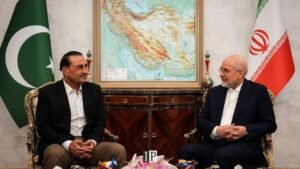
Field Marshal Syed Asim Munir, Chief of Army Staff and Chief of Defence Forces of Pakistan, accompanied by Interior Minister Mohsin Naqvi, has concluded a high-level visit to Tehran aimed at preventing further escalation, facilitating the reopening of the Strait of Hormuz and exploring a negotiated path toward ending the conflict.
The timing is significant.
Field Marshal Asim Munir held meetings with Iranian President Dr Masoud Pezeshkian, Mohsen Rezaei, Representative of the Supreme Leader on the Supreme National Security Council, Parliament Speaker Mohammad Bagher Ghalibaf, Foreign Minister Seyed Abbas Araghchi and Interior Minister Eskandar Momeni.
Iranian leaders appreciated Pakistan’s constructive role and its efforts to promote dialogue, de-escalation and a peaceful resolution.
A Peace Mission — or More Than That?
Describing the Tehran visit as a “peace mission” is not merely a political label. The stated objectives of the visit directly relate to the core elements of peacemaking: preventing escalation, restoring communication, reopening the Strait of Hormuz and creating conditions for renewed negotiations.
The visit also assumes greater significance because, according to Reuters, US President Donald Trump spoke with Field Marshal Asim Munir before his Tehran trip, with Pakistan being asked to use its influence to help bring Iran back toward negotiations.
That places Islamabad in a potentially unique diplomatic position.
Pakistan maintains geographical proximity and longstanding relations with Iran while also retaining direct diplomatic channels with Washington. This gives Islamabad an opportunity to act as a bridge when direct communication between the two sides becomes increasingly difficult.
Why Has the Strait of Hormuz Become a Flashpoint Again?
The Strait of Hormuz is not simply a regional waterway. It is one of the world’s most strategically important energy corridors.
Any prolonged disruption can affect global oil markets, shipping costs, energy security and the economies of Gulf states.
The central problem is that the earlier 60-day diplomatic framework did not resolve the underlying disputes between Washington and Tehran. The deadline passed without a comprehensive agreement, leaving critical questions—including sanctions, security guarantees, maritime access and the future of the conflict—unresolved.
As diplomatic momentum weakened, the Strait of Hormuz once again emerged as a pressure point.
Iran sees control over the waterway as an important element of its strategic leverage, while the United States and its partners view uninterrupted navigation as essential to global commerce and regional security.
This makes Hormuz both a military flashpoint and a diplomatic bargaining tool.
The 60-Day Window Has Closed — But the Crisis Has Not
The expiry of the 60-day framework has created a dangerous diplomatic vacuum.
The temporary mechanism may have reduced the immediate risk of escalation, but it did not eliminate the fundamental disagreements.
This is precisely where Pakistan’s renewed diplomatic initiative becomes important.
Reports indicate that Pakistani officials are discussing fresh proposals in Tehran aimed at reopening the Strait of Hormuz and reviving stalled US-Iran negotiations.
If successful, this could represent not simply a new round of shuttle diplomacy but the beginning of a second phase of Pakistan’s mediation effort.
Is Pakistan Becoming a Mediator Again?
The answer appears to be yes — but cautiously.
Pakistan has already demonstrated its willingness to facilitate communication between Washington and Tehran. The latest Tehran mission, combined with high-level contacts involving the United States and Iran, suggests that Islamabad is once again attempting to create diplomatic space between the two sides.
The significance of Field Marshal Asim Munir’s role should therefore not be viewed only through a military lens.
His engagement with Iran’s political, security and military leadership gives the mission a broader strategic dimension. At the same time, Interior Minister Mohsin Naqvi’s participation reinforces the political and governmental character of the initiative.
The objective appears to be clear: prevent another escalation, restore dialogue and move the crisis from confrontation back toward negotiation.
Can Pakistan Succeed?
Pakistan faces a difficult diplomatic balancing act.
Washington wants stronger commitments from Tehran, while Iran continues to demand relief from American pressure and sanctions and greater recognition of its security concerns.
The Strait of Hormuz adds another layer of complexity.
For Pakistan, however, there is a potentially important diplomatic advantage: it has relations with both sides and does not necessarily need to impose a solution. Its more realistic role is to carry messages, build confidence and help create a channel through which Washington and Tehran can negotiate directly.
That may ultimately prove more valuable than traditional mediation.
But success will depend on one fundamental question: Are Washington and Tehran politically prepared to compromise?
No mediator, however influential, can force peace upon two parties that still believe confrontation serves their interests.
A New Diplomatic Chapter for Islamabad?
Field Marshal Asim Munir’s Tehran visit comes at a moment when the region once again stands at a crossroads.
The expiry of the 60-day framework, renewed tensions around the Strait of Hormuz and the absence of a final settlement have created the need for fresh diplomacy.
Pakistan appears willing to fill that diplomatic space.
If Islamabad succeeds in helping reopen the Strait of Hormuz and bringing Washington and Tehran back to serious negotiations, Pakistan’s diplomatic standing could rise significantly—not only in the Middle East but internationally.
But the road ahead remains uncertain.
For now, the most important question is not simply whether Pakistan has returned as a mediator.
It is whether Islamabad can once again open a door to peace that Washington and Tehran have been unable to open themselves.
The answer may emerge from the Strait of Hormuz—and from whether the next US-Iran dialogue begins in earnest.
— Analysis by Irfan Tariq
