
🇺🇸🇮🇷 USA–IRAN PEACE DEAL: THE ROAD TO SWITZERLAND
🇺🇸🇮🇷 USA–IRAN PEACE DEAL: THE ROAD TO SWITZERLAND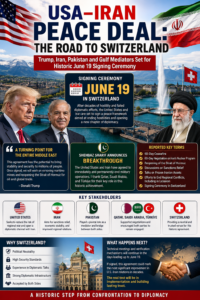
Trump, Iran, Pakistan and Gulf Mediators Set for Historic June 19 Signing Ceremony
Written by Irfan tariq
After decades marked by hostility, sanctions, proxy conflicts, and repeated diplomatic breakdowns, the United States and Iran are reportedly moving toward a breakthrough agreement that could reshape the political landscape of the Middle East.
A formal signing ceremony is expected to take place on Friday, June 19 in Switzerland, where delegations from both Washington and Tehran are anticipated to endorse a new peace framework aimed at de-escalation and long-term diplomatic engagement.
If confirmed, this would represent one of the most significant turning points in U.S.–Iran relations in modern history.
Trump Signals Confidence Ahead of Switzerland Signing
According to statements attributed to former U.S. President Donald Trump, the agreement marks a historic diplomatic achievement that previous administrations were unable to reach.
He described the deal as a potential “turning point for regional stability,” suggesting it could reduce tensions not only between the United States and Iran but across the wider Middle East.
A key element highlighted in the statement is the expected reopening of strategic maritime routes, including efforts to ensure safe passage through the Strait of Hormuz, a critical global oil shipping corridor. The plan reportedly includes measures to clear naval risks and improve maritime security.
Shehbaz Sharif Announces Breakthrough in Talks
The first public indication of a breakthrough reportedly came from Pakistan’s Prime Minister Shehbaz Sharif, who announced that both sides had agreed in principle to end military hostilities.
He praised the shift toward diplomacy and acknowledged the role of regional partners—including Qatar, Saudi Arabia, and Türkiye—in facilitating behind-the-scenes negotiations.
According to the announcement, technical teams will continue refining implementation details ahead of the final signing ceremony in Switzerland.
Pakistan’s involvement has drawn global attention, with observers describing it as a pivotal diplomatic bridge between Washington and Tehran.
Reported Key Terms of the Framework
While the final agreement has not been publicly released, early reports suggest the framework may include:
- A 60-day ceasefire between the United States and Iran
- A parallel 60-day negotiation window focused on Iran’s nuclear program
- Steps toward reopening the Strait of Hormuz for secure maritime trade
- Discussions on sanctions relief mechanisms
- Negotiations regarding frozen Iranian assets
- Efforts to reduce regional escalation, including in Lebanon and other conflict zones
- A formal signing ceremony hosted in Switzerland
Diplomatic sources caution that implementation would likely require extended follow-up negotiations even after the signing.
Key International Stakeholders
United States
Seeking to reduce the risk of a wider regional war while opening structured diplomatic engagement with Tehran.
Iran
Hoping for economic relief, reduced sanctions pressure, and a more stable regional environment.
Pakistan
Emerging as a central mediator, facilitating communication and confidence-building between both sides.
Qatar, Saudi Arabia, and Türkiye
Regional powers that reportedly supported diplomatic channels and encouraged continued negotiations.
Switzerland
Chosen as a neutral host, providing a trusted venue for high-level international diplomacy.
Why Switzerland Was Chosen
Switzerland has long been regarded as one of the world’s most trusted neutral diplomatic hubs.
Its selection reflects several key advantages:
- Long-standing political neutrality
- Strong diplomatic and security infrastructure
- Experience hosting sensitive international negotiations
- Acceptance by both Western and Middle Eastern stakeholders
Geneva, in particular, has a historic role as a center for global diplomacy, making it a symbolic location for potential peace breakthroughs.
What Comes Next
In the days leading up to June 19, negotiators are expected to finalize technical details, verification procedures, and security arrangements.
If the signing proceeds as planned, it could mark the beginning of a major shift in U.S.–Iran relations—moving from confrontation toward structured diplomatic engagement.
However, analysts note that the real test will begin after the ceremony, when implementation, trust-building, and sustained negotiations will determine whether this framework leads to lasting peace or another stalled attempt at reconciliation.
For now, global attention is fixed on Switzerland, where a historic diplomatic moment may be about to unfold.
